July 15, 2022
Exclusion criteria for investments with Forma Futura
Exclusion criteria for investments have a long history and are based on centuries-old moral achievements and considerations. The roots of ethical investments and the associated exclusion criteria can be found in religious movements such as the Quakers and Methodists. In the 18th century, the Methodist Church in North America decided to invest in the stock market. However, their decision came with a caveat: they wanted to exclude certain types of companies, particularly those involved with alcohol or gambling. The Quakers soon followed their example and particularly wanted to avoid investing in arms manufacturing. Increased tobacco consumption and the emergence of pornography in the following decades eventually led to the establishment of the "classic" exclusion criteria for ethical investments: Alcohol, tobacco, gambling, pornography and weapons.
Fossil fuels and nuclear energy as further exclusion criteria
In addition to these traditional criteria, Forma Futura also excludes fossil fuels (oil, coal, and gas) and nuclear energy. Emissions from the combustion of fossil fuels are considered the main cause of global warming. Their use as an energy source must therefore be drastically reduced in the coming years in order to limit global warming to well below 2 degrees Celsius, preferably to 1.5 degrees Celsius, compared to pre-industrial levels, as stipulated in the 2015 Paris Agreement.
Exclusion criteria at Forma Futura: weapons, gambling, pornography, alcohol, tobacco, fossil fuels, fracking, nuclear energy, pesticides, and dual-use goods. These are goods, software, and technology that can be used for both civilian and military purposes.
The extraction of shale gas (fracking) has also been an exclusion criterion at Forma Futura since the company was founded. Fracking involves considerable environmental risks that cannot be completely avoided, even with the best precautions. These include the enormous amount of water required to extract shale gas, the risk of spills in the event of accidents involving transporters, and the artificial storage basins containing contaminated fracking fluid, which must then be treated in a complex, energy-intensive process for reuse or disposal underground. Due to unanswered questions about the actual recoverable quantities and thus the economic viability of shale gas extraction, Forma Futura considers fracking to be highly problematic and not sustainable in the long term. With rising gas prices, there is a risk that fracking will become economically viable. This could delay the necessary expansion of renewable energies and thus jeopardize the energy transition.
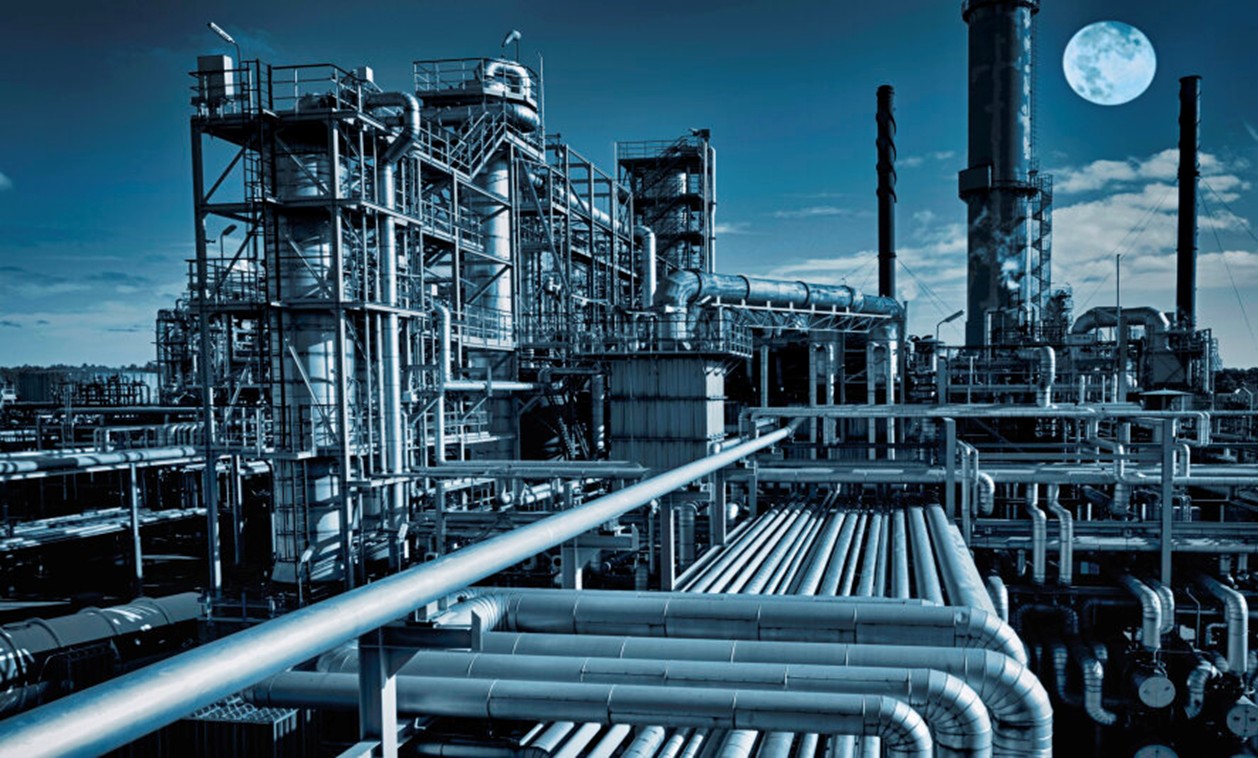
Unlike fossil fuels, nuclear energy is often considered "CO2-free," but in reality it causes many times more emissions per unit of electricity generated than renewable energies when the entire value chain from mining to disposal is taken into account. It also carries risks and costs associated with the proliferation of nuclear weapons, meltdowns (Chernobyl, Fukushima), and radioactive waste. The transport of fossil fuels and nuclear energy is tolerated because a transport infrastructure is also needed for the distribution of renewable energy.
The precautionary principle leads to the examination of further critical points
The above exclusion criteria are consistent with Forma Futura's goal of contributing to an economy that is fair to people and the planet. A company that generates more than 5 percent of its revenue from one of the six economic activities listed above cannot be part of the Forma Futura investment universe, regardless of how well it performs in other areas of sustainability. The five percent threshold also has practical reasons: most companies do not publish exact revenue shares at the product level, so a zero-tolerance approach is not feasible for Forma Futura.
As Forma Futura is committed to the precautionary principle, other critical issues are examined in the companies' sustainability analysis. These include (but are not limited to) issues such as genetic engineering and nanotechnology, pesticides, biofuels, bioplastics, animal testing, business practices in authoritarian states, gold, and other raw materials. If a company engages in a practice that involves such a critical issue, a case-by-case assessment is carried out. The aim of this assessment is to determine whether the activity in question is compatible with Forma Futura's strict sustainability requirements in accordance with the precautionary principle.
Example of a case-by-case assessment: Business practices in an authoritarian state
The business practices of multinational companies in authoritarian countries have recently come under scrutiny due to Russia's war against Ukraine and human rights violations against the Uyghur population in China. In general, companies in authoritarian contexts must apply stricter due diligence measures to avoid contributing to or even causing human rights violations. Forma Futura conducts a case-by-case assessment when a company's business practices in an authoritarian country are known. Companies can contribute to such violations in an authoritarian context in a variety of ways:
Causation: A company can directly cause human rights violations through its own activities, for example, if it exploits the lax human rights situation in a country to exploit or mistreat its employees or other persons.
Contribution: A company can contribute to human rights violations by providing aid, i.e., by offering practical or moral support that has a significant impact on the commission of the human rights violation. For example, a company that encourages a government to forcibly evict people to make way for the construction of a new, highly profitable factory would be contributing to human rights violations in this way.
Direct link: A company can also be held responsible for human rights violations committed by a third party, even if it neither caused nor contributed to them. A direct link exists when there is a connection between a company's activities, products, or services and human rights violations committed by another actor. An example of this would be a construction company that accepts a government contract for the urban redevelopment of an area from which the former residents have been forcibly evicted and expropriated by the government. Such a direct link also exists when companies turn a blind eye to known human rights violations by their business partners. This can be the case, for example, if suppliers are not audited.
Forma Futura may rely on open sources such as third-party reports or direct contact with the company concerned when conducting case-by-case assessments. If the case-by-case assessment concludes that the company in question is involved in such a case of serious human rights violations, either through overwhelming and documented evidence and/or through unsatisfactory dialogue with the company, it will be excluded from the Forma Futura investment universe.
Similar posts

June 1, 2026
CAPITAL WITH IMPACT
Through Forma Futura Invest AG, founding partner Antoinette Hunziker-Ebneter and co-CEO Larissa Jäger focus on companies that make the greatest possible contribution to a sustainable economy and society. But how does a sustainable asset management firm successfully navigate times of ESG backlash, greenwashing, and greenhushing?