
March 3, 2026
Corporate Dialogue 2025: Sustainable finance under geopolitical influence
Sustainability is now mainstream - even in the financial sector. For investors, but also for analysts, it is becoming increasingly difficult to distinguish between genuine commitment and mere lip service. For Forma Futura, the corporate dialog is an integrated and proven tool for assessing companies in terms of their sustainability commitments.
We look back with pleasure on another year in which we have worked with conviction and confidence to bring about sustainable change. The challenges of 2025 have shown us once again how important our joint efforts are. Both the anti-ESG movement in the US and climate and environmental policy setbacks within the EU (e.g., the Omnibus legislative package) have shaped our work in many ways this year.
This is particularly evident in engagement and proxy voting, two important instruments of sustainable finance that have come under pressure, especially in the US. The US Securities and Exchange Commission (SEC) is using antitrust regulations to limit the influence of ESG-oriented investors, proxy advisors, and financial institutions, thereby hindering joint initiatives in the interests of sustainability. Under this political pressure, fundamental collective sustainability commitments have been shaken, as demonstrated by the dissolution of the Net-Zero Banking Alliance in October 2025.
The year 2025 in figures
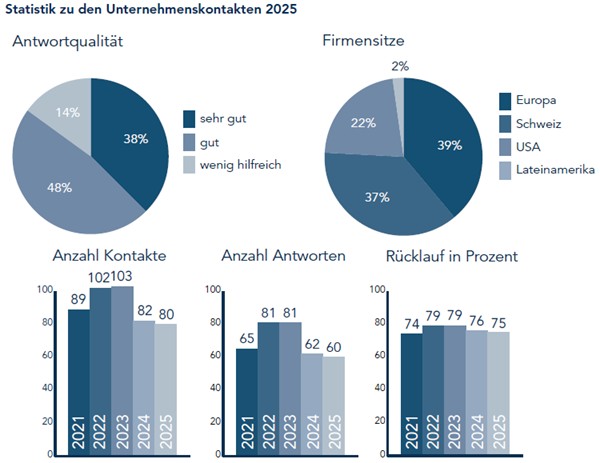
In 2025, we conducted 80 dialogues with companies in our investment universe. The response rate remained high at 75% and the majority of responses were of high quality, proving that our corporate dialogue continues to be taken seriously and is having an impact despite the more difficult environment. Given the countercurrents in the area of sustainability and the increasing reluctance of companies to communicate publicly, direct dialogue is becoming increasingly important as an effective tool for greater sustainability.
.
Diversity policies and climate alliances: Companies shift priorities
The US government's confrontational political stance on sustainable development principles also affects companies in which we invest. Two engagement topics in particular were repeatedly in the spotlight last year: various companies withdrawing from climate alliances and the dismantling of diversity policies.
.

Shortly after leaving the Net-Zero Insurance Alliance, Swiss Re announced that it would no longer have its climate targets validated by the Science Based Targets initiative (SBTi). The SBTi defines a scientifically based global standard for credible decarbonization targets and is therefore an important quality feature for our sustainability analyses.
External and transparent verification processes are key to the credibility of climate strategies. Swiss Re's withdrawal also suggests that decarbonization plans no longer need to be scientifically validated, which we deeply regret. We wrote to Swiss Re to express our concerns. The company rejected any connection with the US government's criticism of initiatives such as the SBTi and emphasized that it remains committed to its climate targets and that its own Climate Transition Plan allows for greater flexibility. Although this plan is based on the findings of the International Energy Agency and the Intergovernmental Panel on Climate Change, we view the declining transparency and exclusion of critical public opinion with skepticism.
We will therefore continue to emphasize the importance of cross-company, scientifically based decarbonization initiatives. This is the only way to thoroughly review and compare climate-friendly corporate strategies and hold companies accountable.
.

In spring 2025, German software company SAP announced that it would no longer include the proportion of female managers in the calculation of long-term variable remuneration for its executive management. We suspected that this development was directly linked to the policies of the current US president, which make it more difficult for companies to commit to diversity, equity, and inclusion (DEI).
We therefore addressed this issue directly with SAP and asked for a statement during a video conference. The company confirmed that the decision was made due to potential legal risks in the US. The US market is very important for SAP, as the government is one of its most important customers. Although understandable, the decision is nevertheless regrettable.
Linking diversity targets to compensation puts the issue high on the management agenda and underscores its importance. SAP emphasized that the proportion of female executives worldwide will continue to be recorded and published—with the exception of the US. The company also assured that promoting a diverse workforce and an inclusive corporate culture will remain a key priority. We continue to view SAP's commitment to sustainability as credible and greatly appreciate its honest communication on this matter.
Recently, we have increasingly observed the phenomenon of "greenhushing," whereby companies conceal or downplay their sustainability achievements in their external communications in order to make themselves less vulnerable to political attacks.
However, our dialogues mostly reveal that companies are staying on track with their sustainability efforts. This is also supported by a recent analysis by Harvard Business Review: The vast majority of companies surveyed (87%) are either maintaining or even stepping up their sustainability efforts, even though there is less reporting on sustainability.
.
Access to healthcare and drug prices: Roche vs. FOPH

In July 2025, Roche withdrew the cancer drug Lunsumio from the Swiss market. The drug had been approved via a temporary "early access" procedure at lower prices, as efficacy data were still lacking. When the Federal Office of Public Health (FOPH) and Roche negotiated an extension in February, Roche rejected the proposed price and demanded a price increase, citing good everyday results. However, the FOPH insisted on complete clinical evidence without special rules. Roche's approach also drew criticism because the company withdrew the option of individual case reimbursement in cases of hardship.
We contacted Roche to find out more about the background to the price dispute. In our letter, we expressed concerns about aggressive pricing strategies that place a strain on public health systems, as well as the lack of transparency surrounding secret discounts, which give pharmaceutical companies an advantage in negotiations with authorities. We also emphasized the importance of comprehensive clinical trials for the approval of new drugs. Exemptions systematically drive up drug prices and can also pose a safety risk for patients.
As stated in the official press release, Roche rejected all criticism. The Lunsumio case is paradigmatic of a fundamental problem for the pharmaceutical industry: the Swiss approval and pricing system is outdated and urgently needs to be modernized so that patients can gain faster access to life-saving therapies. Access is particularly restricted in Switzerland. The company accused the FOPH of being hostile to innovation, as its pricing system does not adequately reflect the value of innovative therapies. The manufacture of a drug is very costly and fraught with risks – a fact that the FOPH does not take sufficiently into account. Roche emphasized that patients already undergoing treatment will continue to receive Lunsumio and that access will still be possible in the future through the Swiss Patient Access Program (SPAP). SPAP is a program for the exceptional reimbursement of drugs in individual cases, which was co-initiated by Roche, among others.
Like the corporate dialogues discussed above, the exchange with Roche and the controversy in general can be understood in a broader political context. For months, the pharmaceutical industry has been facing growing pressure from the US government, which blames the industry for high healthcare costs and disproportionate drug prices. The price wars in European countries may be attempts to compensate for losses due to possible tariffs and price caps.
Despite this complex situation, we appeal to the company's social responsibility. Roche's pricing strategy conflicts with the fundamental goal of ensuring that patients in need have access to life-saving treatments, and we will continue to highlight this issue in our dialogues with the company.
.
Escalation strategies for credible sustainable investing
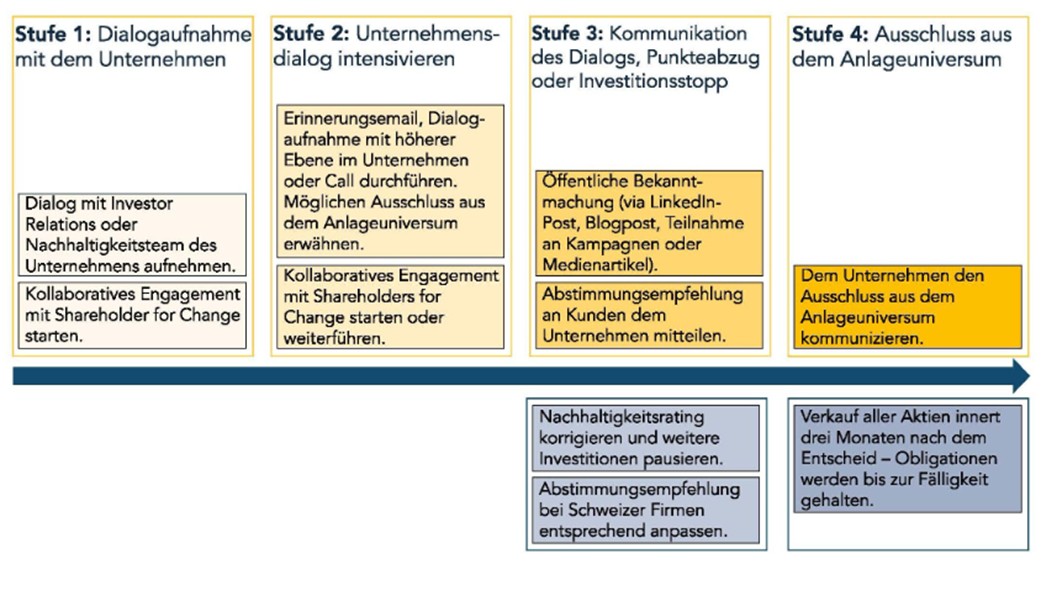
Forma Futura is characterized by a systematic and consistent approach to corporate dialogue.
A key component of this approach is a clearly defined escalation strategy.
This describes a step-by-step escalation path for corporate dialogue in the sense of building pressure on companies,
if the dialogue is unsatisfactory. The aim is to gradually give more emphasis and weight to demands made on companies.
Similar posts

June 1, 2026
CAPITAL WITH IMPACT
Through Forma Futura Invest AG, founding partner Antoinette Hunziker-Ebneter and co-CEO Larissa Jäger focus on companies that make the greatest possible contribution to a sustainable economy and society. But how does a sustainable asset management firm successfully navigate times of ESG backlash, greenwashing, and greenhushing?

