January 31, 2023
Investing with foresight
The global economic situation is currently extremely tense. Recession worries and inflationary tendencies, as well as geopolitical risks, are causing uncertainty on the capital markets. Future developments are very difficult to predict. We therefore consider it all the more important when selecting investments to focus on companies that meet all the necessary requirements to survive such crises. Read here what the long-term investment horizon means for the daily work of portfolio management.
In the current difficult market environment, the portfolio management team at Forma Futura is focusing on shares in quality companies. But how can such companies be identified?
Forma Futura is based on the following criteria:
- Resilient business model
- Solid balance sheet and income statement
- Stable, high return on capital
- Efficient use of invested capital
- Ability to invest in future growth across economic cycles
The resilience of a business model can be derived from the market position of a company. For example, a company is considered to have an advantage if it has a relatively large market share, a strong and well-known brand or is characterized by a high level of innovation. The investment legend Warren Buffett summarizes such competitive advantages as "moat", which protects the profitability of the company. In order to assess how solidly a company is positioned, it is worth taking a look at the balance sheet, income statement and cash flow statement. Among other things, you can determine how heavily indebted a company is or how well the turnover generated translates into profit.
Another important key figure is the return on investment. In simple terms, this indicates how much profit a company generates with the capital invested. If this return is higher than the cost of capital, this means that the capital invested is being increased profitably.
If the company is also able to invest this earned return in future growth and, ideally, even manages to do so across economic cycles, then we are talking about a truly quality company. This means that the company in question is not primarily dependent on external financing for future growth, but can generate this capital itself. Self-generated capital is undoubtedly the preferred method of financing, as it causes neither costs nor dependencies.
However, as the respective market environment, financing conditions or the future prospects of a company can change constantly, for example due to the emergence of new technologies, the portfolio management team always keeps an eye on the companies and actively monitors new developments. If there is a fundamental change in the environment or in a company, we make targeted adjustments to the portfolio so that our clients always own what we consider to be the most interesting stocks in the investment universe.
This portfolio management strategy, which is based on a combination of quality and timing/momentum, has proved extremely successful in the long term. In phases characterized by stability and positive economic developments, we tend to pursue a buy-and-hold approach. During phases in which uncertainty and risks dominate, a more dynamic portfolio management approach often makes more sense. Nevertheless, the average speed at which a client portfolio is restructured - the so-called "turnover ratio" - is rather low at Forma Futura compared to the rest of the industry. This is of interest to customers from a cost perspective, as unnecessarily frequent buying and selling primarily generates costs. In line with our sustainability philosophy, we also want to invest in companies that credibly promote a sustainable quality of life from a portfolio management perspective.
Diversification is another key element of portfolio construction. We take care to diversify away the company-specific risks, the so-called unsystematic risk, as much as possible. It is important to know that the systematic risk, the market risk, cannot be diversified. This has become particularly clear in recent years, when the market environment turned sharply negative due to exogenous factors such as the monetary policy braking maneuvers of various central banks. If such a mood prevails on the markets, this can lead to overreactions among market participants. As a result, even solid, well-positioned companies with intact long-term future and growth prospects can suffer heavy short-term book losses.
The close cooperation between portfolio management and the client team has proved very successful in times like these. This allows the client advisors to discuss individual companies in detail with clients and also answer critical questions in a well-founded manner.
Below we present three stocks from our investment universe that meet the strict requirements for quality companies.
Examples from our investment universe

Bachem is a leading, innovation-driven Swiss pharmaceutical company that manufactures pharmaceutical raw materials, preparations and medicinal products. The company operates internationally with headquarters in Switzerland and sites in Europe, the USA and Asia. With a market share of 25 percent, Bachem is the undisputed market leader in the peptide business. Only a few contract development and production companies have the technological know-how and the necessary capacities to compete with Bachem. The market in which the company operates is worth around CHF 2.5 billion and is growing at an annual rate of over 10% - driven in part by the increasing demand for GLP-1 peptides for weight loss. With over 5,000 products, Bachem has the broadest product range and is therefore very well positioned to benefit from a dynamic yet defensive market.

The DHL Group is a leading global logistics and postal group headquartered in Germany. DHL operates in over 220 countries and territories and employs around 600,000 people. The company benefits from long-term structural growth drivers such as e-commerce, the increasing importance of resilient global supply chains and investments in sustainable logistics solutions. Strategy 2030 includes clear targets for growth in selected sectors: For the Life Sciences & Healthcare sector, DHL Group wants to position itself as a provider of specialized logistics solutions such as temperature-controlled deep-freeze or cryo-storage. Specialized logistics solutions are also in demand for the transition to renewable energies and the transformation of the automotive sector, such as for the transport of wind turbine blades or battery storage systems. With a solid financial basis, high cash flow generation and an attractive dividend policy, DHL is also convincingly positioned in terms of capital returns. Despite economic cycles, the DHL Group offers a balanced profile of stability, growth potential and attractive dividends.

Cisco Systems, Inc. is an American multinational conglomerate for digital communications technology. Cisco develops, manufactures and markets networking hardware, software, telecommunications equipment and other high-technology services and products. Cisco is consistently driving the expansion of its AI portfolio and positioning itself as a leading provider of intelligent network and security solutions. The company is investing in scalable AI infrastructures, automating network operations and using generative AI for decision support. In the area of cyber security, Cisco uses AI in a targeted manner to detect threats at an early stage and combat them effectively. In addition, Cisco makes targeted investments in start-ups via a 1 billion dollar AI fund and works with technology leaders such as NVIDIA to build a strong innovation ecosystem. Cisco combines technological leadership with a solid balance sheet, high profitability and a clear growth strategy in the future market of AI - an attractive investment with long-term potential.
Similar posts
June 1, 2026
CAPITAL WITH IMPACT
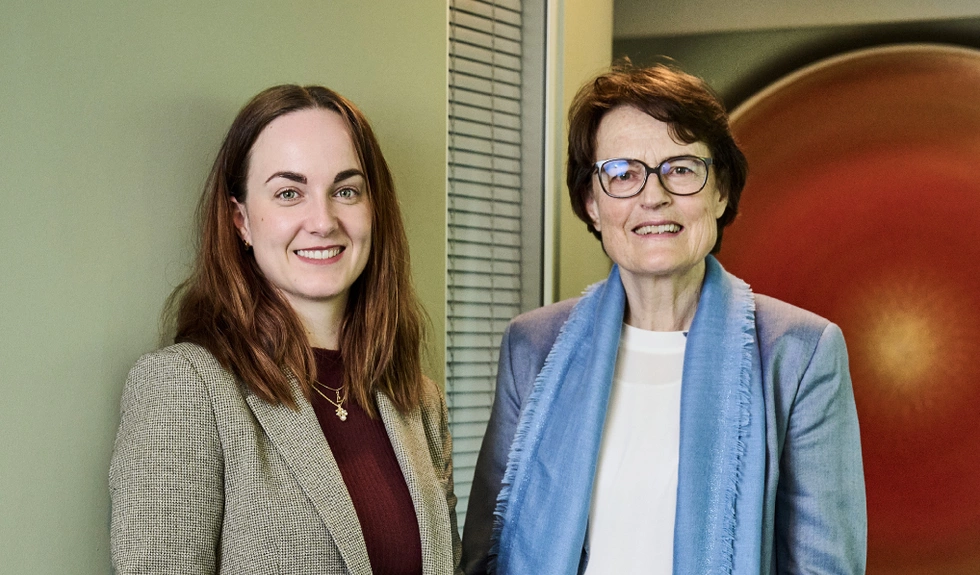
Through Forma Futura Invest AG, founding partner Antoinette Hunziker-Ebneter and co-CEO Larissa Jäger focus on companies that make the greatest possible contribution to a sustainable economy and society. But how does a sustainable asset management firm successfully navigate times of ESG backlash, greenwashing, and greenhushing?