July 14, 2023
Our voting guidelines from a sustainability perspective
As shareholders of companies, shareholders have the opportunity to participate in the development of companies by exercising their shareholder rights. With our voting recommendations for Swiss companies, we at Forma Futura help our clients to vote at general meetings in a way that is in line with sustainable business practices and their long-term interests as shareholders.
At general meetings, shareholders are given the opportunity to vote on important decisions. Shareholders are therefore much more than just silent partners in a company: they can actively influence the sustainable development of the business and put a stop to potentially socially and environmentally harmful practices.
"Exercising shareholder rights is an important lever in sustainable investing."
Since 2012, our voting recommendations for Swiss companies have provided our clients with a sound basis for decision-making so that they can exercise their rights as shareholders responsibly. To this end, we work together with Ethos, the Swiss Foundation for Sustainable Development. When analyzing the agenda items for general meetings, our sustainability team relies on the voting information provided by Ethos on the one hand, and on the internal Forma Futura voting guidelines on the other, in order to be able to make a specific recommendation to clients for each voting agenda item. A recommendation to reject an agenda item can be based on various considerations. Some examples are explained in this article.
(Re)election to the Board of Directors
According to the Swiss Code of Obligations, it is up to the shareholders to elect the members of the Board of Directors at the Annual General Meeting. As a matter of principle, Forma Futura pays attention to generational and gender diversity on the Board of Directors.
This diversity is key, as it allows different perspectives and skills to flow into the management of the company. Generational diversity is particularly advantageous when it comes to mastering the challenges of a rapidly changing and increasingly digitalized business environment.
In order to encourage the flow of new impetus and expertise, Forma Futura has set both an upper limit for the number of years a member of the Board of Directors should hold office (12 years) and an age limit for office holders (70 years). Due to the outstanding track record of certain Board members, their crucial expertise or their status as important shareholders of companies, there is some leeway in these limits, which is reviewed and justified by Forma Futura on an individual basis.
Forma Futura can also propose the rejection of members of the Board of Directors if they hold too many other relevant mandates (more than five other mandates in listed companies) or if they have professional commitments that are problematic from a sustainability perspective, e.g. in the oil or arms industry. Individual members of the Board of Directors or the entire Board of Directors can also be rejected if the proportion of women is deemed to be too low (below 15 percent).
Approval of the annual reports and the sustainability report
When approving the annual reports, Forma Futura pays particular attention to sustainability reporting. Since the 2023 financial year, large listed Swiss companies supervised by the Swiss Financial Market Supervisory Authority (FINMA) have been obliged to publish a report on non-financial matters and submit it to a vote by shareholders. In principle, a rejection occurs if a company only allows its shareholders a consultative vote, which in our opinion is not in line with the Swiss Code of Obligations, which requires a binding vote. In addition, we recommend rejection if the sustainability report does not meet the requirements for transparent, comprehensive sustainability reporting. The most common shortcomings that lead to rejection include no or purely qualitative sustainability targets, anecdotal reporting or the delayed publication of the sustainability report until after the Annual General Meeting.
(Re)election of the auditors
The auditors ensure that the financial reports of companies comply with the relevant accounting principles, do not contain any irregularities and therefore accurately reflect the financial situation of the companies. The independence of auditors is therefore of great interest to all stakeholders concerned, including shareholders. This can be jeopardized if there are links between the partners of the auditors or the auditors commissioned with the mandate and the audited company (members of the board of directors, important shareholders, management). The independence of an auditor may also be called into question if, in addition to the audit fee, the auditor receives substantial funds for non-audit services (e.g. consulting services), if it has been the auditor of a company for a long time (more than 10 years) or if it receives unusually high amounts (in the tens of millions) for auditing services. Forma Futura examines these cases on an individual basis and, if necessary, proposes a rejection of the auditor.
Amendments to the Articles of Association and other topics
Companies regularly amend their articles of association to better adapt them to the practices of growing operations or to a changing regulatory environment. Forma Futura generally recommends the adoption of most amendments to the articles of association, unless they run counter to the interests of shareholders and/or have a negative impact on the sustainability performance of companies.
On January 1, 2023, the Federal Act on the Amendment of Company Law entered into force. The aim of the revision of company law is to improve corporate governance, modernize company law in general and transpose the Ordinance against Excessive Compensation in Listed Companies Limited by Shares, which came into force on 1 January 2014, into federal law. Companies had until the end of 2024 to adapt their articles of association and any other documents to the new law.
In 2023, for example, several Swiss companies proposed amending their articles of association to allow purely virtual general meetings to be held in future without a physical meeting venue. Forma Futura generally welcomes the holding of hybrid general meetings, as this also allows those shareholders who cannot or do not wish to travel to the general meeting to participate. However, the complete lack of a physical meeting venue prevents important networking opportunities for shareholders, which means a weakening of the shareholder base. For this reason, Forma Futura has proposed that the relevant agenda items be rejected. Agenda items that violate the principle of unity of subject matter are also rejected. This occurs when controversial amendments to the Articles of Association are combined with other, unproblematic amendments in a single agenda item despite a lack of thematic connection in order to force a blanket approval by the shareholders.
Forma Futura also provides voting recommendations on frequently discussed topics such as the company's remuneration policy, the appropriation of retained earnings and capital increases, among others. These voting recommendations are also based on Forma Futura's holistic understanding of sustainability and follow best practice in the area of corporate governance.
From the invitation to the vote: the Forma Futura voting recommendations process
General Meetings are generally held within six months of the end of the financial year; for most Swiss companies, this takes place between the beginning of March and the end of May. Invitations to General Meetings, including the agenda, are usually published one to two months before the date of the meeting and sent to all shareholders.
As soon as the invitation to a general meeting of a Swiss company invested in by Forma Futura is published, the sustainability team analyzes the individual agenda items.
This is done on the one hand on the basis of the company's own guidelines and sustainability principles, and on the other with the help of the voting information formulated by Ethos.
For each agenda item, an individual recommendation for approval or rejection is formulated together with a brief justification. Finally, a meeting is held with the Executive Board to discuss and approve the recommendations.
Forma Futura prepares a document with the specific voting recommendations for each general meeting of the invested Swiss companies. This is sent to the relevant clients 10-14 days before the Annual General Meeting.
Whether and how clients vote is entirely at their own discretion and can be done either physically at the Annual General Meeting, electronically or through an independent proxy.
Similar posts
June 1, 2026
CAPITAL WITH IMPACT
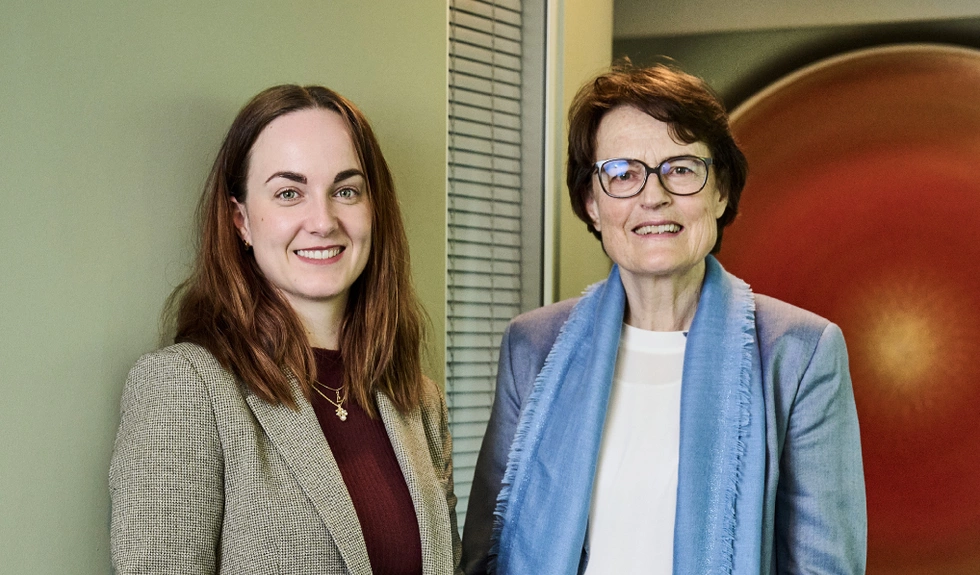
Through Forma Futura Invest AG, founding partner Antoinette Hunziker-Ebneter and co-CEO Larissa Jäger focus on companies that make the greatest possible contribution to a sustainable economy and society. But how does a sustainable asset management firm successfully navigate times of ESG backlash, greenwashing, and greenhushing?